The New Face of Skin Health: Why Stress and Movement Are the Missing Ingredients Your Skincare Routine Needs
May 28, 2026
Reading time: 7 minutes
You have tried the serums. You have invested in the routines. You have cut out red meat and dairy, gone fragrance-free, and religiously applied SPF. And yet your skin still tells a story you did not write for it.
Here is what most skincare brands will never tell you: no product can outwork a dysregulated nervous system.
The missing conversation in skin health is not about what you put on your face. It is about what is happening inside your body at a cellular and neurological level, every single day.
Chronic stress, a nervous system stuck in overdrive, and a body that rarely gets to fully exhale are quietly driving the inflammation, breakouts, dullness, and accelerated aging that no cleanser can fix.
This is the conversation I was built for.
What Is Actually Happening in Your Body When You Are Stressed
When your body perceives stress, whether that is a difficult email, a sleepless night, or simply the relentless pace of modern life, it activates the hypothalamic-pituitary-adrenal axis, commonly known as the HPA axis.
This triggers the release of cortisol, your primary stress hormone.
In small, well-timed doses, cortisol is your friend. It wakes you up in the morning. It helps you perform under pressure. It is part of a healthy, responsive system.
The problem is chronic cortisol. When your nervous system never fully downregulates, cortisol levels stay elevated. And elevated cortisol is one of the most underappreciated drivers of skin dysfunction.
Here is what it does:
It breaks down collagen.
Cortisol activates enzymes that degrade collagen and elastin, the very proteins responsible for firm, plump, youthful skin. This is not something a collagen supplement can easily undo when the breakdown is happening continuously.
It increases sebum production.
Higher cortisol signals your sebaceous glands to produce more oil, which feeds the cycle of congestion, clogged pores, and breakouts, particularly along the jawline, chin, and philtrum (the area below your nose and above your lips), where hormonal inflammation tends to concentrate.
It compromises your skin barrier.
Your skin barrier is your first line of defence. Chronic stress reduces ceramide production, weakening that barrier and making your skin more reactive, more sensitive, and more prone to transepidermal water loss.
It drives systemic inflammation.
This is the big one! Sustained cortisol elevation creates a low-grade inflammatory state throughout the body. That inflammation shows up on your skin as redness, rosacea flares, eczema, psoriasis, and accelerated cellular ageing.
No topical product addresses any of this at the root.
The Nervous System Is the Skincare Ingredient Nobody Is Talking About
Your autonomic nervous system has two primary states: sympathetic, which is your fight-or-flight response, and parasympathetic, which is your rest-and-digest state.
Most people in modern life are spending the vast majority of their time in sympathetic dominance. Always on. Always available. Always doing.
The body registers this as a low-level threat, and it responds accordingly, keeping cortisol elevated, keeping inflammation simmering, keeping the skin in a state of chronic reactivity.
What your skin actually needs is parasympathetic time.
Time in the parasympathetic state is when your body repairs. It is when cellular regeneration happens. It is when inflammation is resolved rather than sustained. It is when your skin gets to do the quiet, regenerative work that produces the glow no highlighter can replicate.
The question then becomes: how do you actually shift your nervous system into that state, consistently and sustainably?
This is where intentional movement becomes medicine.
Why Pilates Is Nervous System Regulation in Motion
Pilates is often sold as a core workout. And it is. But reducing it to that is like calling meditation a breathing exercise. Technically accurate, profoundly incomplete.
When Pilates is practised with intention, with breath as the anchor and presence as the practice, it becomes one of the most effective tools available for nervous system downregulation.
Here is the mechanism:
Breath is the remote control for your nervous system.
The breath is the only autonomic function you can consciously control. When you slow and deepen your breath, as Pilates inherently requires, you directly activate the vagus nerve.
The vagus nerve is the primary pathway of the parasympathetic nervous system. Stimulate it, and your body begins to shift out of sympathetic dominance.
And here is something I love sharing: singing and humming activate the vagus nerve too. So put on your favourite song and sing along, because it is genuinely good for you.
Somatic awareness interrupts the stress loop.
One of the defining features of chronic stress is that we stop inhabiting our bodies. We live in our heads, in our to-do lists, in our phones. Pilates demands that you return to your body.
That act of returning, of feeling your foot placement, your ribcage expansion, your hip alignment, interrupts the cognitive stress loop and brings the nervous system back to the present moment.
Controlled, flowing movement reduces cortisol.
Research consistently shows that moderate, rhythmic, low-impact exercise lowers cortisol more effectively than high-intensity training, which can actually spike it. Pilates sits in the sweet spot: active enough to be stimulating, controlled enough to be regulating.
It builds body literacy.
Over time, a regular Pilates practice teaches you to notice when your body is holding tension, when your breath is shallow, when your jaw is clenched. That awareness itself is a regulation tool. You cannot change what you cannot feel.
What I Have Seen and Experienced
I have been in this space for long enough to know that the most transformative shifts in a client’s skin rarely come from a new product recommendation.
They come when someone begins to genuinely slow down. When they commit to movement that is not punishing. When they start sleeping better because their nervous system is no longer running at full capacity at midnight.
When they stop approaching their body as something to push through and start relating to it as something to listen to.
I have watched skin change in ways that no serum could explain. Not overnight, and not without the other pillars in place, but with a consistency that tells you something systemic has shifted.
This is the work that I am interested in. Not the surface. The system.
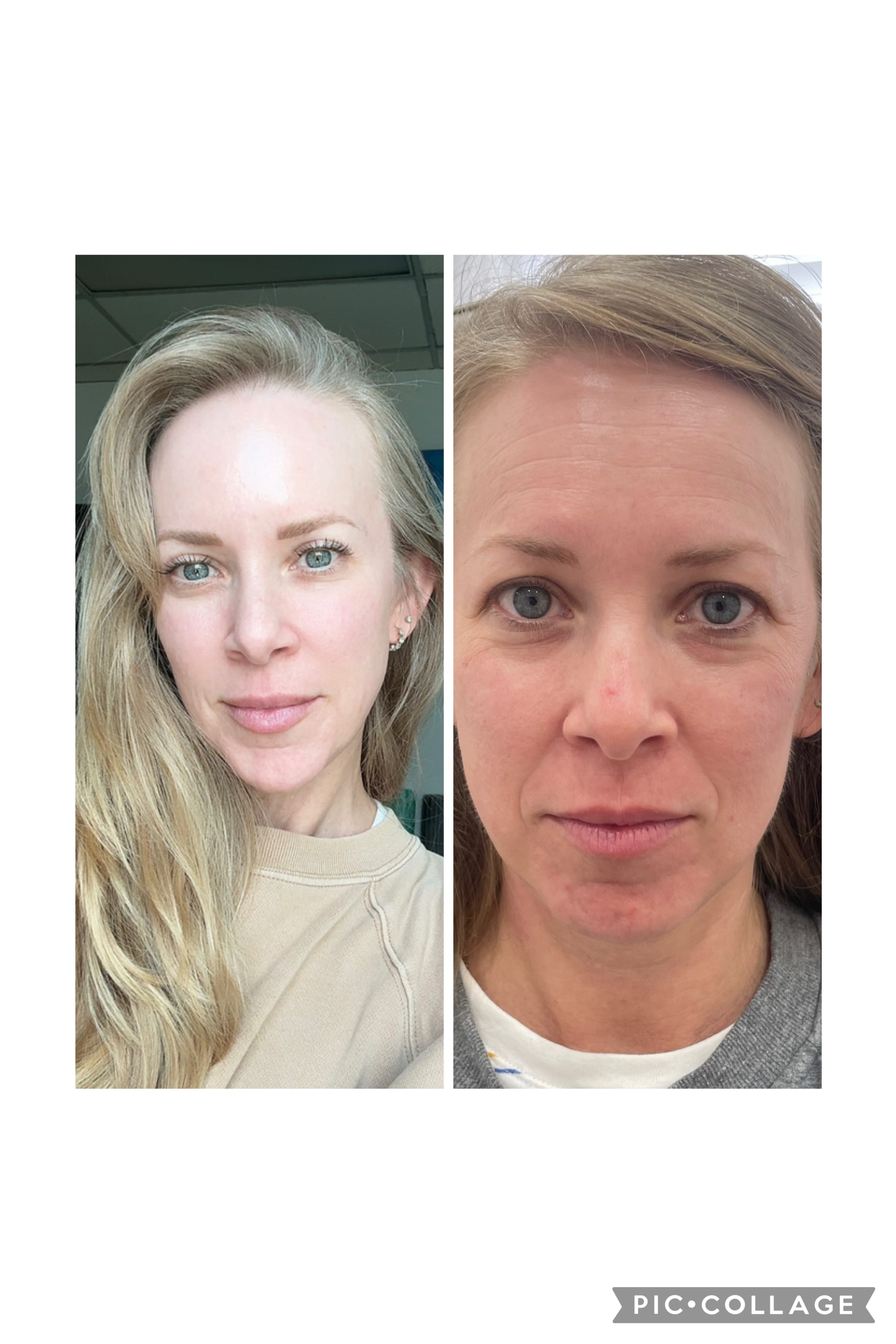
The Ozean Approach: Skin, Gut, Nervous System as One Ecosystem
Your skin does not exist in isolation. It is in constant conversation with your gut, your hormones, your nervous system, and your stress load.
When one part of the system is dysregulated, the skin reflects it.
This is why my philosophy at Ozean does not separate these pillars. Skin health without gut health is incomplete. Nervous system regulation without movement is theoretical. Movement without breath is just exercise.
When you bring them together, the results are different in kind, not just degree.
Where to Start: A Practical Entry Point
If this resonates and you want to begin shifting the conversation with your body, start here.
One.
Commit to two to three Pilates sessions per week that prioritise breath and presence over intensity. Let them be slow. Let them be felt.
Two.
Create a genuine wind-down ritual in the hour before sleep. Not scrolling, not replying to messages. Something that signals to your nervous system that the day is done. This alone changes cortisol patterns over time.
Three.
Notice your skin without judgment for thirty days while practising the above. Not measuring, not analysing. Just noticing. You may be surprised by what you see.
Four.
Consider what you are putting into your body, not just onto it. The gut-skin axis is real and worth exploring in its own right.
Final Thought
The beauty industry is brilliant at selling you the next thing to put on your face. And some of those things are genuinely good.
But the most radical thing you can do for your skin is address what is underneath it. The stress you are carrying. The nervous system you have never permitted to rest. The movement practice that could be regulating you instead of depleting you.
That is the new face of skin health.
And it starts from the inside.
Explore Ozean Pilates & Wellness and discover personalized Pilates designed to support your strength, mobility, and overall well-being.
A Note from Sarah
Sign up for Quarterly Upgrades for Movement, Skin & Longevity
We hate SPAM. We will never sell your information, for any reason.
Author