5 Pilates Exercises for Lower Back Pain
Jan 29, 2025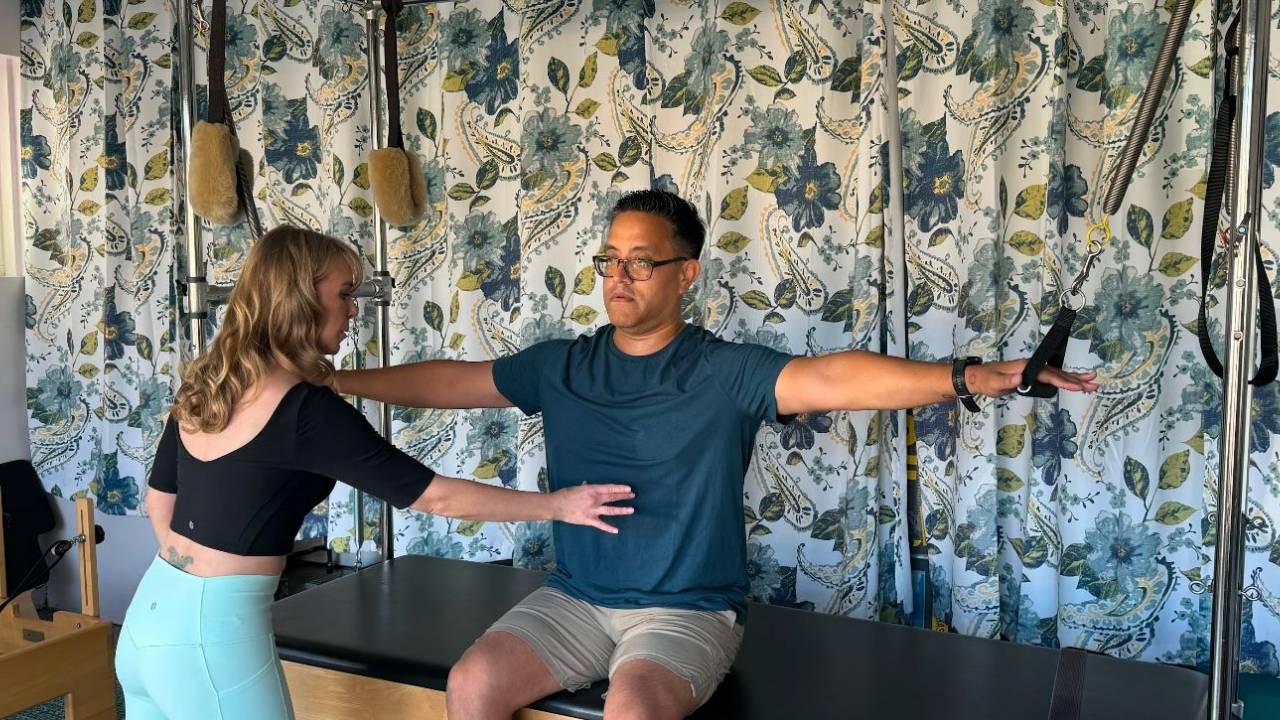
Average Read Time: 8 minutes
Lower back pain can make everyday movement feel more difficult. Sitting, standing, bending, walking, or getting comfortable at the end of the day can become frustrating when your back isn't feeling its best.
For many people, appropriately selected exercise can be an important part of managing lower back pain. Pilates is one movement method that can be adapted to different bodies and abilities, with an emphasis on controlled movement, strength, coordination, and body awareness.
However, there is no single exercise routine that works for every type of back pain. The exercises that feel appropriate for one person may not be appropriate for another.
If you're experiencing lower back pain, think of the following movements as examples of Pilates-based exercises that may be incorporated into an individualized practice rather than a universal prescription.
How Pilates Can Support a Healthy Back
Pilates can incorporate several elements that are relevant to back health, including core strength, hip strength, mobility, coordination, and postural awareness.
Core Strength
Your trunk muscles help coordinate and support movement throughout the body. Pilates exercises can challenge these muscles through controlled movements and different positions.
The goal isn't to keep your spine completely still. It's to develop the strength and control to move efficiently.
Hip and Lower-Body Strength
The muscles around your hips and pelvis contribute to how your body manages everyday movement.
Strengthening these areas can complement trunk-focused exercises and create a more balanced approach to movement.
Mobility
Stiffness can affect how comfortably you move.
Pilates can incorporate gentle mobility exercises for the spine, hips, and other areas that contribute to overall movement. The appropriate range of motion will depend on the individual.
Body Awareness
Pilates asks you to pay attention to how you're moving.
Breathing, alignment, coordination, muscular effort, and movement quality all become part of the practice. This awareness can be particularly valuable when you're learning how to move with greater confidence after experiencing pain.
5 Pilates-Based Exercises for Lower Back Pain
There is no universally "best" Pilates exercise for lower back pain. Your instructor may select, modify, or replace exercises depending on your symptoms and movement patterns.
Here are five Pilates-based movements that can be incorporated into a back-focused practice when appropriate.
1. Pelvic Curl
The pelvic curl is a foundational Pilates movement that involves lifting and lowering the pelvis from the mat.
It can challenge the muscles around the hips and trunk while encouraging coordinated movement between the pelvis and spine.
How to do it
-
Lie on your back with your knees bent and your feet comfortably positioned on the mat.
-
Rest your arms alongside your body.
-
Gently engage your abdominal muscles.
-
Slowly lift your pelvis from the mat, moving through a comfortable range.
-
Pause briefly at the top without forcing the height.
-
Lower back down with control.
Modification: Reduce the height of the movement or perform a smaller pelvic movement if a full bridge doesn't feel comfortable.
2. Bridge
A basic bridge can strengthen the muscles around the hips while challenging trunk control.
It can be particularly useful when the goal is to build strength without requiring a large range of spinal movement.
How to do it
-
Lie on your back with your knees bent and feet on the mat.
-
Keep your arms relaxed alongside your body.
-
Engage your trunk gently.
-
Press through your feet and lift your pelvis.
-
Keep the movement controlled and avoid forcing your back into an exaggerated arch.
-
Lower your pelvis slowly.
Start with a small lift and increase the challenge gradually as appropriate.
3. Supine Marching
Supine marching is a simple way to challenge core control while moving one leg at a time.
How to do it
-
Lie on your back with your knees bent and feet on the mat.
-
Find a comfortable neutral position for your spine.
-
Engage your abdominal muscles without holding your breath.
-
Slowly lift one foot from the mat.
-
Return it to the floor with control.
-
Alternate sides.
The goal is to keep the movement controlled rather than allowing the pelvis to shift excessively from side to side.
4. Bird Dog
Bird dog is a movement that challenges balance, coordination, and trunk stability.
Although it isn't exclusive to Pilates, variations of this movement can be incorporated into a Pilates-based conditioning program.
How to do it
-
Begin on your hands and knees.
-
Position your hands underneath or slightly forward of your shoulders and your knees underneath your hips.
-
Engage your trunk gently.
-
Extend one arm or one leg while maintaining control.
-
Progress to extending the opposite arm and leg if appropriate.
-
Return to the starting position and switch sides.
Modification: Keep one hand or knee on the mat and work one limb at a time.
5. Side-Lying Leg Work
Side-lying Pilates exercises can strengthen the muscles around the hips while challenging pelvic control.
How to do it
-
Lie comfortably on your side with your head supported.
-
Stack your legs or position them slightly in front of you for balance.
-
Engage your trunk gently.
-
Slowly lift the top leg without allowing your pelvis to roll backward.
-
Lower the leg with control.
-
Repeat on the other side.
The movement does not need to be large. Focus on control and maintaining a stable position.
What About Stretching for Lower Back Pain?
Stretching can feel helpful for some people, but more stretching isn't automatically better.
If your hips or other surrounding muscles feel restricted, gentle mobility work may be incorporated into your program. The right movements depend on your individual presentation.
This is one reason a personalized approach can be more useful than following a generic list of exercises online.
Tips for Practicing Pilates With Lower Back Pain
If you're incorporating Pilates into your movement routine while experiencing lower back pain, keep these principles in mind:
Start gradually. Choose movements that match your current abilities rather than jumping into advanced exercises.
Prioritize control. Slow, intentional movement is often more useful than rushing through repetitions.
Modify when necessary. Change the range of motion, resistance, position, or number of repetitions when an exercise doesn't feel appropriate.
Don't force painful movements. Stop an exercise if it causes sharp, worsening, or significant pain.
Pay attention to your response. Your symptoms during and after exercise can provide useful information about whether a movement or level of intensity is appropriate.
Consider professional guidance. A qualified Pilates instructor, physical therapist, or other appropriate healthcare professional can help you determine which movements are suitable for your particular situation.
When Should You Get Your Back Pain Assessed?
Lower back pain can have many different causes. Exercise may be appropriate for many people, but it isn't a substitute for assessment when one is needed.
Speak with a healthcare professional if your pain is severe, persistent, worsening, or interfering significantly with your daily activities.
Seek urgent medical attention if back pain occurs alongside concerning symptoms such as significant weakness or numbness, loss of bladder or bowel control, or numbness around the groin or genital area.
If you've been diagnosed with a spinal condition, recently experienced an injury, or have persistent symptoms, seek appropriate professional guidance before beginning a new exercise routine.
Personalized Pilates for Lower Back Pain at Ozean Pilates & Wellness
At Ozean Pilates & Wellness, we believe your movement practice should be adapted to you.
Private sessions allow exercises to be selected and modified based on your current abilities, movement patterns, goals, and how your body responds to each movement.
Rather than following a fixed list of exercises, we can focus on building strength, improving mobility, developing body awareness, and helping you feel more confident in your movement.
Frequently Asked Questions
Is Pilates good for lower back pain?
Pilates is one form of exercise that may help some people with lower back pain. Research suggests potential benefits for pain and physical function, although results vary and Pilates isn't appropriate in the same way for everyone.
How often should I do Pilates for lower back pain?
There isn't one schedule that works for everyone. Your frequency should take into account your symptoms, fitness level, recovery, and overall activity. Consistency is generally more useful than trying to do too much too quickly.
Can I do Pilates if I have chronic lower back pain?
Some people with chronic lower back pain can participate in appropriately adapted Pilates. If your pain is persistent or you've been diagnosed with a specific condition, professional guidance can help you determine what movements are appropriate.
Can Pilates prevent lower back pain from coming back?
Regular physical activity and maintaining strength and function can be valuable for overall back health. However, no exercise method can guarantee that back pain will not return. A sustainable movement routine should be adapted to your individual needs.
Should I stop Pilates if an exercise hurts my back?
If an exercise causes sharp, worsening, or significant pain, stop the movement and reassess. You may need to modify the exercise or choose a different movement. Persistent or concerning symptoms should be discussed with an appropriate healthcare professional.
Explore Ozean Pilates & Wellness and discover personalized Pilates designed to support your strength, mobility, and overall well-being.
A Note from Sarah
Sign up for Quarterly Upgrades for Movement, Skin & Longevity
We hate SPAM. We will never sell your information, for any reason.
Author