Exploring the World of Pilates Apparatus: Enhance Your Practice
Oct 08, 2024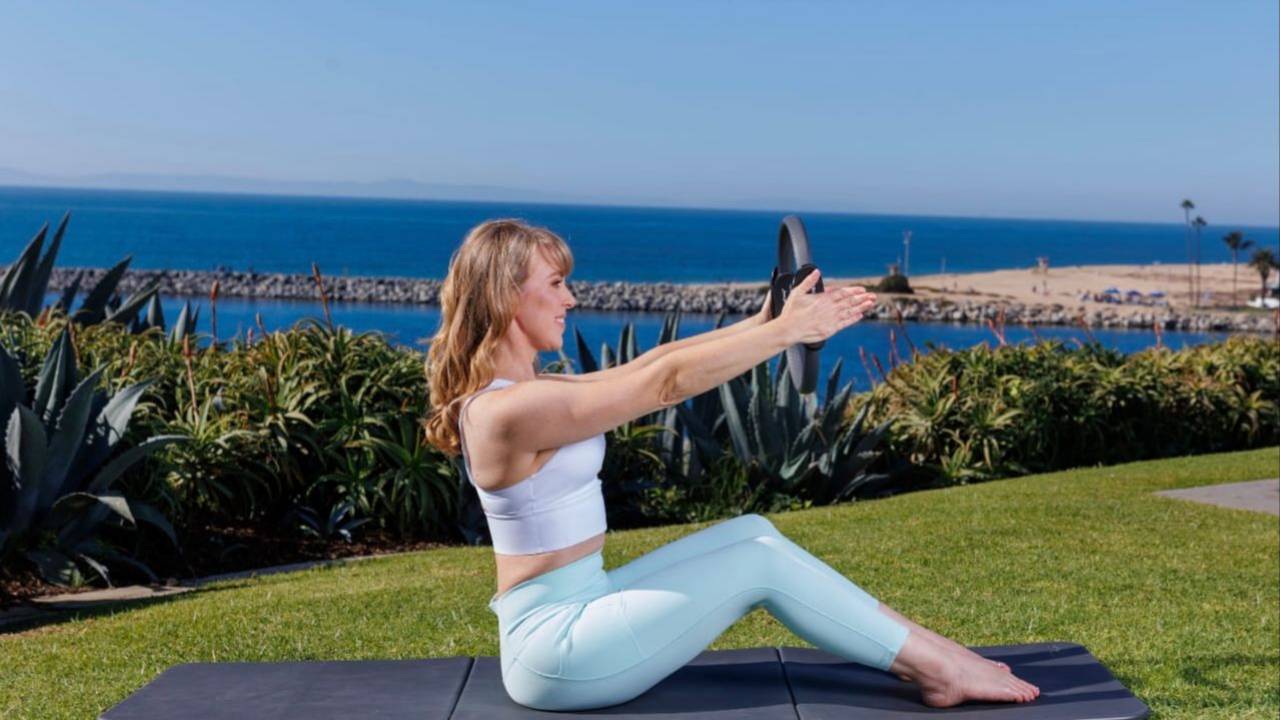
Average Read Time: 8 minutes
Pilates is much more than mat exercises. While matwork provides an important foundation, the Pilates method includes a wide range of specialized apparatus designed to support, challenge, and deepen your movement practice.
At Ozean Pilates & Wellness, our studio is equipped with a variety of Pilates apparatus. Each piece of equipment offers different ways to work with resistance, stability, mobility, coordination, and body awareness.
Whether you're completely new to Pilates or an experienced practitioner looking to deepen your practice, understanding the different types of Pilates equipment can help you appreciate the method's versatility.
Here is a closer look at the apparatus and props you may encounter in a Pilates studio.
1. Matwork
Mat Pilates is one of the foundations of the Pilates method. Using your own body weight, mat exercises develop strength, control, coordination, flexibility, and body awareness.
Many mat exercises emphasize core engagement, breathing, alignment, and controlled movement. Because matwork requires relatively little equipment, it can also be adapted for practice in a variety of settings.
Mat Pilates provides an important foundation for understanding the principles of movement that carry over to the apparatus.
2. Reformer
The Reformer is one of the best-known pieces of Pilates equipment.
It consists of a moving carriage, springs, straps, and a series of adjustable components that allow exercises to be performed with different levels of resistance and support.
The Reformer can be used for a remarkably wide range of exercises. Depending on the movement and setup, it can challenge strength, stability, coordination, mobility, and balance.
Because the resistance and setup can be adjusted, Reformer exercises can be adapted for different experience levels and movement goals.
3. Cadillac or Trapeze Table
The Cadillac, also known as the Trapeze Table, is a larger apparatus consisting of a raised, padded table surrounded by a frame with various springs, bars, and straps.
It provides numerous options for supported and resisted movement. Exercises on the Cadillac can challenge the core, upper and lower body, coordination, mobility, and overall body control.
The apparatus can also provide useful support for people working on specific movement goals, making it a versatile part of a comprehensive Pilates practice.
4. Wunda Chair
The Wunda Chair is a compact piece of Pilates equipment with a seat and spring-loaded pedal.
Despite its relatively small size, the Wunda Chair can provide a significant challenge. Exercises can be performed seated, standing, kneeling, or in other positions, often requiring considerable balance, stability, and control.
The Chair is particularly useful for exploring functional movement while developing strength and coordination.
5. High Chair or Electric Chair
The High Chair, sometimes referred to as an Electric Chair, offers another way to work with resistance, balance, strength, and control.
Its design provides different options from the Wunda Chair and can be especially useful for exercises involving standing, seated, and supported positions.
Depending on the apparatus and setup, resistance can be adjusted to accommodate different movement goals and levels of challenge.
6. Ladder Barrel
The Ladder Barrel combines a curved barrel with a ladder-like structure and provides a unique environment for exploring spinal mobility, flexibility, strength, and alignment.
Its curved surface can support exercises that move the spine through different positions while also creating opportunities to work on the hips, core, and overall body awareness.
The Ladder Barrel can be particularly valuable for practitioners who want to explore mobility and movement through a different range of positions.
7. Spine Corrector
The Spine Corrector is a smaller curved apparatus designed to support the body while exploring spinal movement and alignment.
Its shape creates opportunities for exercises involving spinal flexion, extension, and mobility. It can also provide support during movements that might otherwise be difficult to perform on a flat surface.
Like other Pilates apparatus, the Spine Corrector can help you develop a greater understanding of how your body moves and organizes itself.
8. Tower
The Pilates Tower combines a vertical frame and springs with a mat-based setup.
It offers many of the resistance and movement possibilities associated with larger apparatus while maintaining a strong connection to matwork.
The springs can be used to create resistance or assistance during exercises, allowing practitioners to explore strength, mobility, stability, and coordination in different ways.
9. Springboard
A Springboard is a wall-mounted Pilates apparatus that uses springs and handles to create resistance.
It can be used for both standing and seated exercises and offers many possibilities for working on strength, stability, coordination, and mobility.
Because the resistance comes from the springs and the body has to organize itself against that resistance, Springboard exercises can be an engaging way to develop body awareness and control.
10. Pedi Pole
The Pedi Pole is a vertical pole that can be used with various Pilates exercises to explore posture, balance, coordination, and control.
The pole provides a reference point and can challenge you to maintain alignment while performing controlled movements.
Although it is a relatively simple piece of equipment, it can create a surprisingly nuanced movement challenge.
11. Magic Circle
The Magic Circle, also known as a Pilates Ring, is a small resistance prop that can be incorporated into matwork and apparatus exercises.
It can be placed between the legs, held in the hands, or used in other positions to add resistance and encourage greater awareness of muscle engagement.
Because it is small and portable, the Magic Circle is also one of the easiest Pilates props to incorporate into a home practice.
12. Small Props
Pilates studios may also use a variety of smaller props to change the experience of an exercise.
These can include resistance bands, foam rollers, small balls, cushions, and other supportive or resistance-based tools.
Small props can be used to provide additional feedback, create instability, add resistance, support positioning, or introduce a new movement challenge.
They may look simple, but they can completely change how an exercise feels and which muscles or movement patterns you notice.
Why Use Pilates Apparatus?
One of the things that makes Pilates so versatile is the ability to change how an exercise is performed by changing the equipment, resistance, position, or level of support.
Pilates apparatus can provide:
-
Resistance: Springs and other equipment can increase or decrease the challenge of a movement.
-
Support: Apparatus can help you explore movements that may be difficult without assistance.
-
Stability challenges: Certain exercises require you to control your body against a moving or unstable surface.
-
Mobility work: Equipment can create new opportunities to explore range of motion.
-
Body awareness: Different forms of resistance and support can provide useful feedback about alignment and movement.
-
Variety: Using different apparatus keeps a Pilates practice dynamic and allows exercises to be approached in many different ways.
The right apparatus is not necessarily the one that looks the most challenging. The most useful equipment is the equipment that supports the goal of the movement and meets your body where it is.
Which Pilates Apparatus is Best for You?
There isn't one piece of Pilates equipment that is universally "best." The right apparatus depends on your experience, goals, movement needs, and what your instructor is trying to help you develop.
A beginner may benefit from the support and feedback offered by certain apparatus, while an experienced practitioner or athlete may use equipment to create a more specific strength, mobility, coordination, or performance challenge.
This is one reason working with an experienced Pilates instructor can be so valuable. Rather than simply moving from one piece of equipment to another, you can learn why a particular apparatus, exercise, resistance level, or modification has been selected for you.
Explore Pilates Apparatus at Ozean Pilates & Wellness
At Ozean Pilates & Wellness, Pilates apparatus is used as a tool for individualized movement, not simply as a collection of equipment.
Whether you're beginning your Pilates journey, returning to movement, looking to build strength and mobility, or incorporating Pilates into your training as an athlete, your practice can be adapted to your body and your goals.
Frequently Asked Questions
What is Pilates apparatus?
Pilates apparatus refers to the specialized equipment used in the Pilates method, including the Reformer, Cadillac, Wunda Chair, Tower, Ladder Barrel, and other equipment and props. The apparatus can provide resistance, support, feedback, and new movement challenges.
What is the most popular Pilates apparatus?
The Reformer is one of the most widely recognized and commonly used pieces of Pilates equipment. However, each apparatus serves different purposes, so the most appropriate equipment depends on the practitioner's goals and experience.
Can beginners use Pilates apparatus?
Yes. Pilates apparatus can be adapted for beginners as well as experienced practitioners. An instructor can adjust the resistance, positioning, range of motion, and exercise selection to create an appropriate starting point.
Is Pilates apparatus only for people who are already fit?
No. Pilates apparatus can be used across a wide range of experience and fitness levels. The equipment can provide both support and challenge, depending on how it is configured and how the exercises are taught.
What is the difference between a Reformer and a Cadillac?
The Reformer uses a moving carriage, springs, straps, and other components to create resistance and support. The Cadillac uses a raised table surrounded by a frame with springs, bars, and straps. Both offer a wide variety of exercises, but their designs create different movement possibilities.
Explore Ozean Pilates & Wellness and discover personalized Pilates designed to support your strength, mobility, and overall well-being.
A Note from Sarah
Sign up for Quarterly Upgrades for Movement, Skin & Longevity
We hate SPAM. We will never sell your information, for any reason.
Author